






AI in Football: Transforming Strategies, Scouting, and Fan Engagement


AI in Football: Transforming Strategies, Scouting, and Fan Engagement
In recent years, Artificial Intelligence (AI) has become a strong presence across industries, including sports. Although AI in sports is not entirely new, its deeper integration into football’s strategic, operational, and fan-focused areas is gaining significant attention. A convergence of cheaper sensors, faster cloud computing, and better modeling techniques has shifted AI from a curiosity to a core capability. Clubs that once relied on a few interns compiling spreadsheets now run integrated analytics departments that collaborate with coaches, medical teams, and commercial staff. Crucially, football’s continuous flow, relative scarcity of scoring events, and complex interdependence between players make it an especially rich, yet challenging, environment for AI—very different from sports like baseball, where discrete events and abundant data simplify modeling.
This article examines how AI is reshaping football—how teams create strategies, scout players, and connect with fans.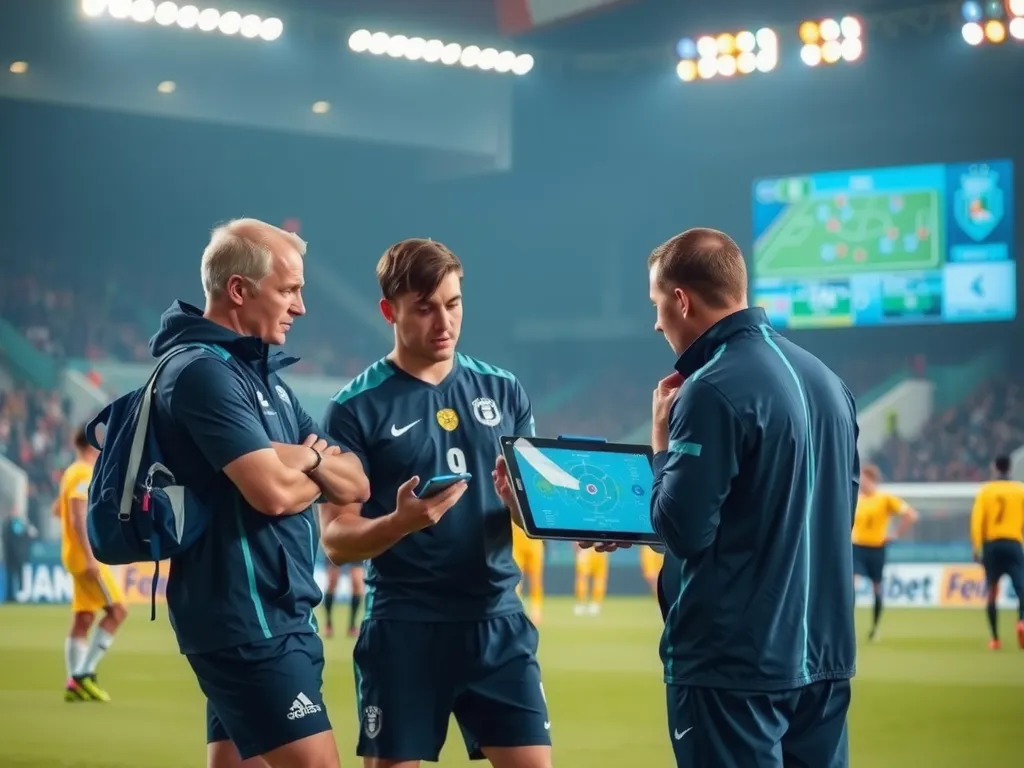 It also compares examples from basketball and other sports to highlight what makes football’s adoption unique. From predictive analytics that inform tactics to advanced scouting methods, AI is ushering in a period of notable precision and efficiency. The technology is also enhancing the fan experience with real-time interactions and personalized content across digital platforms. Under the hood, systems synthesize event data (passes, shots, pressures), tracking data (player and ball coordinates), and biometric signals to generate actionable insights. The most successful teams are learning to combine these streams coherently, translating numbers into language coaches trust and into training drills players can execute. That translation layer—turning probabilities into practice—is where impact is ultimately realized.
The discussion covers current uses and future possibilities, emphasizing AI’s emergence as an essential tool in modern football. Adoption is not uniform: some clubs move quickly, others prefer incremental pilots. As with any technology, value depends on fit and execution. Poorly integrated AI can overwhelm staff with dashboards, while well-integrated systems simplify choices and clarify trade-offs. Beyond the pitch, ethical questions around player privacy, algorithmic bias, and competitive balance are rising to the surface, prompting clubs to design governance frameworks alongside models. What follows aims to demystify the tools, spotlight practical applications, and suggest sensible guardrails for sustainable progress.
AI in Football: Revolutionizing Strategy Formulation
AI has transformed how teams design and carry out game plans. In the past, coaches relied largely on intuition and limited data outputs; now, football leans on data-driven decision-making. Systems using machine learning analyze vast datasets, from player performance metrics to opponent tactics. Conceptual models such as expected goals (xG), expected threat (xT), and pitch control estimate the value of actions and territory, helping staff quantify questions that were once purely subjective: Which passing lanes are most dangerous? Where does a pressing trap yield the highest payoff? How should fullbacks position to maintain rest defense against counters? Compared with basketball—where possessions are frequent and set plays are common—football demands models that infer intention from messier, continuous sequences. AI excels at tracing these sequences, making sense of off-ball movement, and highlighting subtle interactions that tilt a match’s balance.
Predictive Analytics in Strategy
AI’s ability to forecast outcomes from historical data is crucial. These systems study previous matches to uncover patterns that may escape the human eye, such as predicting opposition formations and identifying weak points in real time. The result is a strategic edge that was once out of reach. Modern pipelines can simulate “what if” scenarios before kickoff—testing the effects of a higher defensive line, alternative pressing triggers, or inverting a fullback into midfield. During matches, streaming models update probabilities with each action, estimating the expected value of a switch of play or a substitution under current fatigue conditions. Reinforcement learning agents, trained on years of sequences, can propose candidate strategies, while human coaches evaluate the suggestions through the lens of squad strengths and context. Crucially, the analytics must be simple enough to communicate in 30 seconds on the touchline, which is why clubs translate complex models into clear cues like zone heatmaps and concise coaching prompts.
Case Study: Premier League’s Tactical Evolution
In the Premier League, AI platforms like “Metrica Sports” enable real-time data analysis. Liverpool FC, known for its early adoption of sports technology, uses these systems to guide in-game adjustments, boosting efficiency and adaptability against different opponents. In practice, this looks like analysts flagging pressure success rates on specific flanks, identifying when an opponent’s fullback is isolated, or recommending timing for a substitution based on declining sprint capacity. Video and positional data are synced so that a coach can jump directly to moments where a press was broken or a third-man run appeared, reinforcing or correcting behaviors on the fly. Comparable approaches exist across the league: some clubs employ set-piece models to tailor corner routines to opponent marking schemes; others use pass-lane occupancy metrics to encourage or discourage certain build-up routes. The common thread is not a single model, but the organizational habit of testing hypotheses with data and adjusting quickly when the evidence demands it.
AI in Scouting: Precision and Potential
Scouting, a cornerstone of team building, is undergoing a quiet revolution powered by AI’s ability to process and interpret player data. Analytics platforms assess an athlete’s potential beyond what is immediately visible during matches. Models learn how performance translates across leagues and styles—crucial for predicting how a winger in a counterattacking side might adapt to a possession-dominant team. Age curves help quantify likely development, while similarity searches surface affordable players with profiles matching established stars. Compared with basketball, where player impact can be isolated more readily, football demands richer context: was a midfielder’s passing completion high because he played safe, or because he broke lines under pressure? AI assists by segmenting actions by game state, pressure level, and field zone, producing a nuanced view that complements the scout’s qualitative judgment.
Identifying Hidden Talents with AI
AI systems break down video frame by frame to evaluate skill level, decision-making speed, and physical attributes. This tech-enabled approach gives scouts a comprehensive performance snapshot that supports recruitment strategies and investment choices. Computer vision can track a player’s body orientation, first touch quality, and scanning behavior before receiving the ball—factors long admired by experienced scouts but difficult to quantify. Off-ball intelligence, such as decoy runs or pressing angles, is captured via tracking data and turned into features that correlate with team success. The goal is not to replace the scout but to surface prospects who might be overlooked due to league visibility, height biases, or non-traditional pathways. When a short list emerges, human experts re-watch key sequences, interview coaches, and consider adaptability elements like language skills, cultural fit, and work-rate to avoid overfitting to the numbers.
Insights from Football Leagues
La Liga’s use of AI-powered recruitment tools, such as Catapult Sports’ wearable sensors, illustrates the depth of data-driven insights shaping transfer window strategies. Clubs gain access to detailed analytics that enhance decision-making and can reduce scouting errors. Wearables quantify high-speed running, accelerations, and decelerations; integrated with event and tracking data, they reveal how a player’s physical outputs align with tactical demands. A fullback who thrives in frequent overlaps may need a different conditioning profile than one who tucks inside to create midfield overloads. Smaller clubs benefit by identifying undervalued attributes—like ball recoveries in advanced zones or progressive passing under pressure—allowing them to compete financially by shopping in niche markets. Meanwhile, youth academies use AI to track development milestones, calibrating training loads and technical benchmarks to individual growth rather than one-size-fits-all drills.
Enhancing Performance and Preventing Injury
Beyond strategy and recruitment, AI plays a crucial role in reducing injury risks and raising performance levels. Injury prediction models assess stress metrics alongside historical injury data to identify potential vulnerabilities. Instead of relying solely on fixed thresholds (for example, a fixed number of sprints), clubs increasingly use individualized baselines that adapt to each player’s physiology and role. Models analyze travel schedules, sleep quality proxies, surface type, and congestion periods to forecast risk windows. They also monitor training response day to day, flagging when a player’s neuromuscular markers drift from normal patterns. Coaches then adjust microcycles—modifying duration, intensity, or drill design—to mitigate risk while preserving tactical objectives. The aim is to keep the best players available more often, not merely to avoid injuries but to sustain peak performance across long seasons and multiple competitions.
Predictive Health Monitoring
AI systems like Zone7 use analytics to predict injury likelihood by gathering biometric data and performance metrics, enabling preventative measures to be fine-tuned, prolonging player health and career longevity. These platforms look for subtle signatures—a drop in explosive power after congested fixtures, or asymmetries that hint at compensations—to recommend targeted interventions. Importantly, they provide explanations rather than opaque scores, helping medical teams and players understand why a rest day, modified drill, or strengthening plan is advised. Psychological load and travel fatigue, often underemphasized, are incorporated as contextual features, since mental stress can degrade movement quality and decision speed. Over time, monitoring builds a feedback loop: interventions are tested, outcomes observed, models updated, and best practices refined, yielding a living system that learns with the squad.
Case Implementation: Bundesliga
The Bundesliga’s partnership with SAP’s technology suite reflects a comprehensive approach to using AI to reduce soft-tissue injuries, significantly cutting down player downtime and preserving squad depth throughout the season. Beyond dashboards, the integration spans planning tools for coaches, data entry for medical staff, and communication channels that keep players informed about their plans. Training content is periodized to balance tactical work with conditioning, and when risk indicators spike—say, during a three-match week—the system suggests adjustments like shorter small-sided games or reduced high-intensity intervals. The result is a shared operational picture: analysts, physios, and coaches reference the same evidence when making trade-offs, preventing the classic disconnect where one department pushes for volume while another urges caution.
AI and Fan Engagement: Bridging the Digital Divide
AI’s role in football extends beyond the pitch to fan engagement, enabling new forms of interaction and content experiences. Modern supporters expect immediacy and personalization—highlights clipped minutes after a goal, commentary tailored to their expertise level, and notifications aligned with their preferences. Clubs use AI to cluster fans into segments based on behavior, geography, and interests, serving different journeys to families attending a first match and to hardcore tacticians rewatching pressing sequences. The same principles seen in media streaming—recommendation engines, A/B testing, and attention modeling—now shape team apps, websites, and social feeds. When executed well, AI strengthens community rather than flattening it, surfacing local stories, academy profiles, and women’s team content alongside first-team news, all tuned to the audience’s appetite.
Personalized Experiences Through AI
AI allows clubs to deliver personalized content, targeted advertisements, and interactive features through platforms like IBM’s Watson. These systems analyze engagement data to tailor delivery across apps and social channels, keeping fans connected on a large scale. Personalization extends beyond content to commerce: dynamic ticket bundles, seat upgrades, and merchandise recommendations are shaped by predicted preferences and price sensitivity. Language models can rewrite match reports for different reading levels, produce captioned clips for accessibility, or offer multilingual experiences for global audiences. Sponsors benefit from smarter placement—creative is matched to the right segment at the right moment—while clubs measure impact via uplift in engagement and conversion rather than vanity metrics alone. Transparency matters too: clear settings let fans control notifications and data use, building trust that personalization serves the supporter, not just the bottom line.
Interactive Fan Platforms
Tools powered by Microsoft’s Azure sports platforms let fans explore matches in greater depth, offering interactive analytics, needs-based content suggestions, and gamified experiences that appeal to varied audiences. Second-screen features visualize passing networks, pressure zones, and on-ball probabilities alongside live broadcasts, turning complex analytics into intuitive graphics. Augmented reality in stadiums can overlay player names and sprint speeds during warmups, while at-home viewers access alternate commentary tracks—tactical, youth-focused, or even coach-led. Fantasy games and predictor challenges are enhanced by AI that sets fair difficulty levels and flags potential bad actors, keeping competitions engaging and trustworthy. The best platforms also consider inclusion and accessibility: text alternatives for visuals, color palettes suitable for color-vision deficiencies, and audio descriptions ensure data does not become a barrier to enjoyment.
The Future of AI in Football: Looking Ahead
The momentum behind AI in football points to many promising developments. In the near term, richer datasets could advance virtual coaching assistance, predictive game modeling, and fully automated training modules, reshaping preparation away from the pitch. Generative models will help create opponent-specific video packs, synthesizing thousands of events into crisp narratives that highlight tendencies and vulnerabilities. Camera systems guided by AI will improve broadcast storytelling with adaptive angles and auto-tagged moments that feed both coaching and fan channels. We should also expect greater use of agent-based simulations that model team interactions under varied rules and constraints, offering fresh ways to explore tactical ideas before risking them in competition. As these tools spread, governance and competitive balance will matter: leagues may set standards for data sharing or officiating aids so that progress benefits the sport holistically.
AI and Virtual Reality Collaborations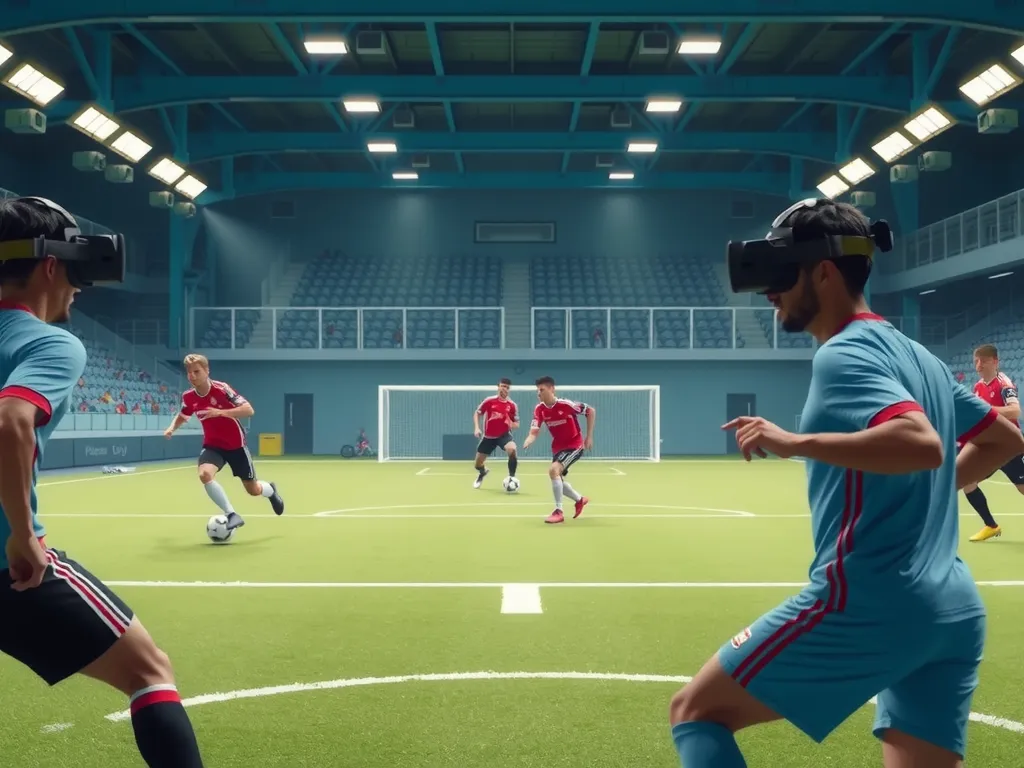
AI-powered VR environments are poised to add a new dimension to tactical training, delivering virtual demos that mirror real match scenarios without physical strain, improving situational awareness and decision-making without on-pitch fatigue. Midfielders can rehearse scanning patterns in congested zones; goalkeepers can face a library of penalty styles and develop anticipatory cues; defenders can practice stepping out as a unit to spring offside traps. Because the environments are data-driven, they replicate opponent spacing and tempo with high fidelity rather than generic animations. Beyond VR, “digital twins” of training sessions allow analysts to replay drills in 3D, tweak parameters, and test counterfactuals—what if the winger held width for one more touch, or the pivot rotated earlier? Over time, these tools will merge with live feedback: a player reviewing a clip on the tablet at halftime could instantly practice that scenario in a lightweight simulation, closing the loop between insight and execution.
Concluding Thoughts: AI, Football, and the Path Forward
The intersection of AI and football continues to advance, with technology enhancing nearly every part of the sport. From sophisticated strategies and precise scouting to performance gains and immersive fan experiences, AI’s transformative role is clear and expanding. Yet the human layer remains decisive. The best systems succeed because coaches craft good questions, analysts communicate clearly, and players buy into the rationale behind adjustments. Ethical design is integral: teams should anonymize where possible, obtain informed consent for sensitive data, and stress-test models for bias that could unfairly penalize certain player types. As more stakeholders—players’ unions, leagues, broadcasters—participate in setting standards, AI can evolve in ways that protect individual rights while elevating the quality and fairness of competition.
As clubs adopt these technologies, the sport stands to grow in competitive strength and global fan engagement. Future breakthroughs will refine integration approaches, placing AI at the heart of football’s ongoing evolution. Practical steps matter: start with narrow, high-impact use cases; align metrics with coaching language; and establish feedback rituals that capture on-the-ground realities. Change management is often the difference between promising pilots and lasting transformation. When leaders model curiosity, celebrate learning, and resource cross-functional collaboration, AI becomes a catalyst for cohesion rather than a source of friction. The reward is not only better decisions in the moment but compounding learning over seasons.
By understanding these dynamics and applying AI effectively, football not only improves performance metrics but also deepens connections with a digitally evolving audience, supporting a dynamic future for the beautiful game. Grassroots programs and women’s football stand to benefit as tools become cheaper and more accessible, enabling community clubs to analyze training loads safely and showcase talent with credible data. Fans, too, can become more informed participants, engaging with analytics that explain the “why” behind a manager’s choices without drowning the magic of unpredictability that makes football beloved. Ultimately, AI should amplify the sport’s essence: skill, creativity, resilience, and collective intelligence expressed on and off the pitch.
Explore more on AI in sports and how it’s transforming industries at
wp.hunnt.ai
. There you will find additional case studies, primers on core analytics concepts, and practical guides for building data-informed cultures that respect both performance and people. Whether you are a coach, analyst, player, or supporter, continuing the learning journey will help you ask sharper questions—and turn AI from a buzzword into a genuine competitive advantage.