






AI in Sports Betting: Transforming Predictions and Outcomes


AI in Sports Betting: Changing Predictions and Outcomes
The rapidly evolving world of sports has welcomed artificial intelligence (AI), and sports betting is one of its biggest beneficiaries. AI now supports player development and strategy while transforming how predictions are made. As data analysis and machine learning advance, models that once relied on intuition now process millions of data points in seconds. Player-tracking sensors, computer vision from broadcasts, and real-time event logs create streams too complex for manual analysis. AI turns this raw, messy input into clear, actionable insight. Fans see more engaging odds and markets; sportsbooks get sharper pricing and risk control; professional bettors gain a disciplined, probability-driven framework. Human judgment still matters, but it is increasingly augmented by fast, adaptable, and highly scalable intelligence.
AI and Data Analysis: Changing Betting Strategies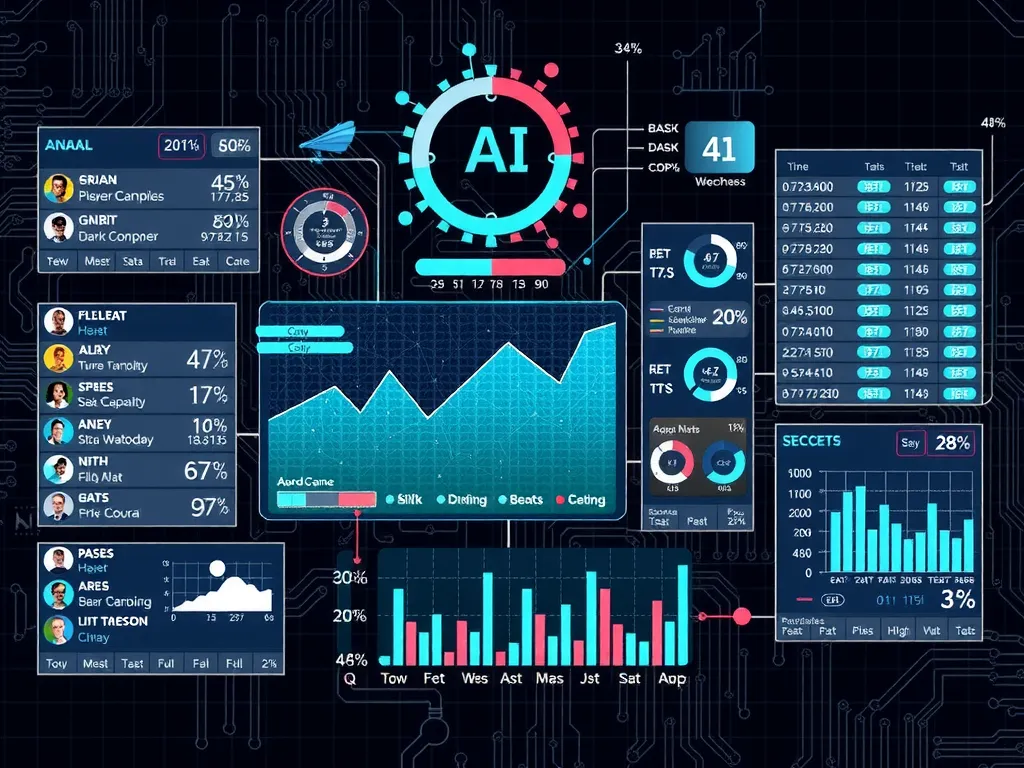
AI handles vast data with precision, a crucial edge in fast-moving markets. By examining historical results, player stats, and weather, it uncovers signals human analysts might miss. Modern pipelines blend structured statistics with unstructured text—injury reports, coach interviews, and social media sentiment—turning language into numeric features that can be compared across seasons. Context matters: travel, rest, altitude, playing surface, and officiating tendencies help explain performance beyond headline metrics. AI quantifies subtle effects—such as crosswinds on field-goal odds—and nudges prices closer to true value. For bettors, dashboards surface mismatches between market odds and model estimates, prompting a wager or a pass. For operators, anomaly detectors flag suspicious activity or stale lines before they become costly. Above all, AI compresses the analysis window from hours to seconds, enabling decisions at market speed.
Machine Learning Algorithms: The Heart of Modern Betting Models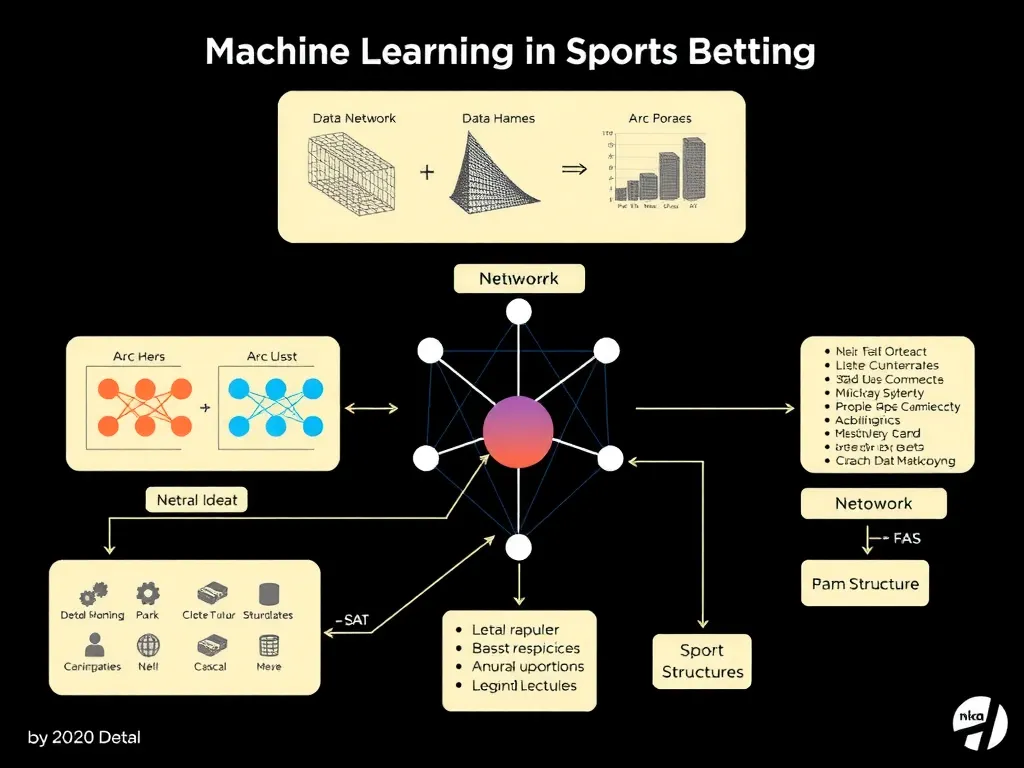
Machine learning sits at the heart of modern betting models, learning from past data to anticipate future results and continually improving with feedback. Different problems demand different tools: regression for totals or margins, classification for win probabilities, ranking for power ratings, and survival analysis for time-to-event questions. Ensembles that blend gradient-boosted trees, random forests, and neural networks often outperform any single approach by balancing bias and variance. Robust workflows use cross-validation to curb overfitting, calibration to align predicted probabilities with reality, and backtesting to confirm that edges persist after costs and market movement. Because sports evolve—coaching philosophies shift, rules change, athletes train differently—model drift is inevitable. Well-run teams monitor feature stability, retrain when relationships shift, and retire signals that no longer work. Crucially, the market itself is data: sudden odds moves after lineup news carry information that models learn to respect, deciding when to listen and when to disagree.
AI-Powered Predictive Analytics: Real-Time Insights and Changes
AI-powered predictive analytics provides real-time insight that matters most during live betting. Models ingest event streams—possessions, pitches, serves, penalties—and update probabilities after each play, often in fractions of a second. Monte Carlo simulations generate thousands of possible game paths to produce distributions for final scores, player props, and micro-markets such as “next point” or “first team to 10.” Computer vision adds context by tracking positioning and ball trajectories, improving estimates of shot quality in basketball or expected goals in soccer. Operators use these tools for automated market making and hedging; bettors use them to hold, add, or lock in profits. Tournament settings amplify the value as AI simulates brackets under different seedings and injury scenarios. The result is responsiveness—shrinking the gap between new information and intelligent action.
Case Studies: AI Changing the Betting Scene
Consider companies like BetGenius and Stats Perform, which use AI to power advanced betting models. Their predictive analytics improve decision-making for clients and increase accuracy across markets. In practice, these platforms aggregate live event data, enrich it with derived metrics such as pace and efficiency, and deliver feeds that price micro-markets and flag odds that drift too far from consensus. Teams and media partners tap the same engines to create clear, fan-friendly insights. Integrity tools apply pattern recognition to unusual bet timing or concentration on obscure markets, supporting investigations of potential manipulation. Professional bettors combine commercial data with in-house models to capture small, repeatable edges—often just one or two percent—that compound over thousands of decisions. The best results appear when human game knowledge meets machine speed and consistency.
Challenges and Ethical Considerations in AI Sports Betting
These advantages come with challenges, especially around fairness and transparency. AI can create uneven access to sophisticated tools, and poorly governed systems risk embedding bias. Clear model governance helps: document data sources, define acceptable features, and monitor for discriminatory impacts that may arise from proxies like geography or socioeconomic indicators. Athlete data raises sensitive questions about consent, ownership, and how granular tracking should be. On the consumer side, personalized recommendations must pair with responsible-gambling safeguards—deposit limits, friction for rapid re-betting, and monitors that detect risky patterns. Transparency need not expose proprietary code, but it should explain how predictions should be interpreted, what confidence intervals mean, and when uncertainty is highest. Because models can fail—through outlier games, data outages, or rule changes—systems need circuit breakers, fallback pricing, and human review to keep markets safe, fair, and resilient.
Conclusion: The Future of AI in Sports Betting
AI is a transformative force in sports betting, supplying tools for more accurate predictions and guiding strategy from pregame to live markets. As technology evolves, it will further improve experiences for sportsbooks and bettors. Emerging capabilities include generative models that summarize games and explain scenarios, multimodal systems that fuse video, audio, and sensors, and edge computing that pushes analysis closer to the stadium for lower latency. Expect more personalized, guardrailed assistants that translate probabilities into plain language—flagging high variance and weak signals. Collaboration among leagues, regulators, and operators will determine how quickly these tools scale and how responsibly they are deployed. The goal is not perfect prediction but calibrated, explainable probabilities that help people make better decisions.
As these innovations develop, responsible adoption remains crucial. Bettors should pair model outputs with fundamentals—bankroll management, line shopping, and an understanding of variance—while resisting overreactions to small samples. Operators should publish clear guidance on how live prices are derived and provide tools that help customers set limits and take breaks. Educators and analysts can bridge the gap by teaching what a 60% probability implies over time and why even great models lose frequently in the short run. With a human-in-the-loop approach, transparent communication, and continuous auditing, AI can make betting markets smarter, safer, and more engaging—elevating the entertainment value of sports without eroding the unpredictability that makes them so compelling.