






Enhancing Sports Strategy with AI: Leveraging AI Models in Football and Basketball

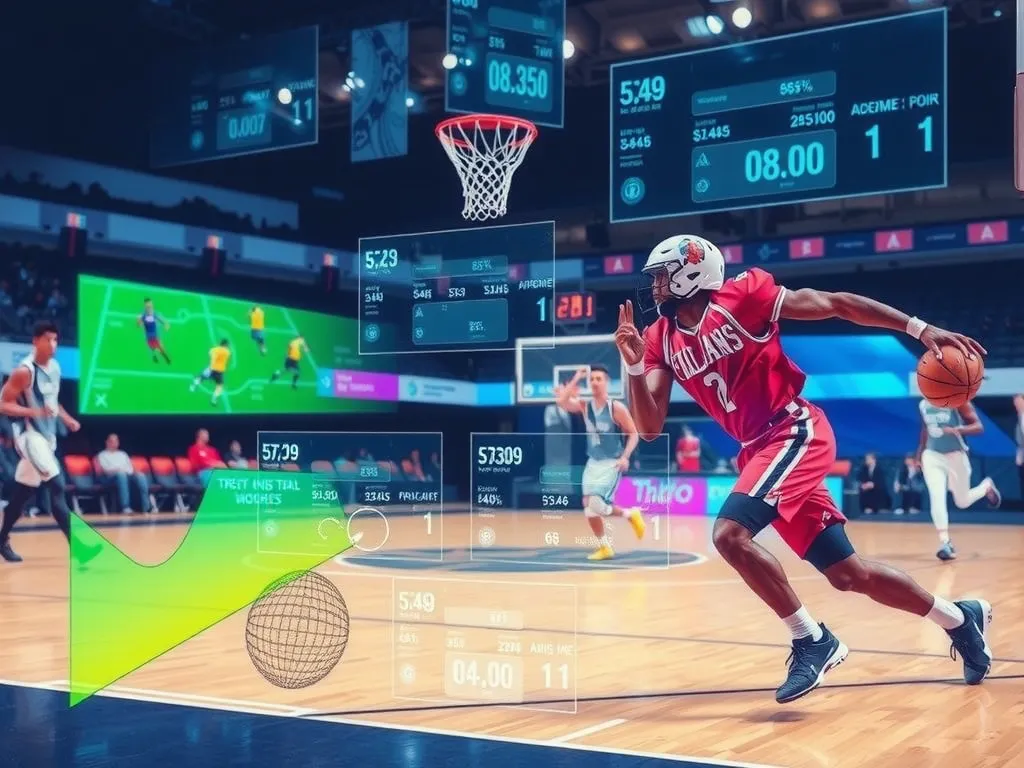
Boosting Sports Strategy with AI: Utilizing AI Models in Football and Basketball
In today’s rapidly evolving sports scene, strategy and performance are key. Artificial Intelligence (AI) is changing how games are played and evaluated, particularly in Football and Basketball. By using AI models, teams enhance their tactics and boost overall effectiveness. Coaches, performance analysts, and front-office staff increasingly lean on data streams—ranging from wearable sensors and optical tracking to medical records and opponent scouting reports—to uncover patterns a human might miss in the heat of competition. The result is not a replacement for intuition, but a sharper, more consistent foundation for decision-making under pressure, where seconds and inches decide outcomes.
As AI technology progresses, its influence on game planning keeps expanding, affecting results and improving player performance. This article looks into how AI—including Gemini AI models—is applied across sports to enhance team strategy and performance analysis. Advances in computer vision, natural language processing, and multimodal learning now allow analysts to combine video, numbers, and text-based reports in one coherent workflow. AI can summarize a week’s worth of clips, highlight the most consequential possessions, and surface tendencies that inform both training sessions and in-game adjustments. In short, smarter tools are collapsing the distance between analysis and action.
Grasping the Role of AI Models in Sports
AI models are the backbone of modern sports strategy by converting data into practical insights through analysis and predictive modeling. By simulating game scenarios and player actions, AI provides coaches and analysts with a clearer perspective for making informed decisions. Supervised learning classifies plays and predicts outcomes; unsupervised clustering groups similar possessions or player profiles; reinforcement learning tests how strategies evolve against adaptive opponents. Together, these approaches can estimate the value of a pass, the likelihood of a shot going in, or the risk that fatigue undermines late-game execution—turning raw data into a living playbook.
The Gemini AI models, in particular, excel at handling complex datasets and aiding real-time decision-making on the field. This technology minimizes human error and improves the precision of strategic planning. Because multimodal systems can ingest video frames, sensor readings, and textual scouting notes at once, they can flag events—like a defensive lapse or a player’s declining sprint speed—without the analyst combing through hours of footage. Coaches can query these models in natural language, asking, “Show me our most efficient press triggers against a 4-3-3,” and receive concise, evidence-backed answers with suggested drills and clips, keeping the human firmly in control of the final call.
AI in Football: Shaping Tactical Approaches
Football’s rapid pace and unpredictability make it an ideal candidate for AI-driven support. Through tools such as scenario simulations and predictive performance models, AI aids teams in developing stronger, more flexible tactics. Models can evaluate pressing intensity, pitch control, and expected goals to compare the risks and rewards of a high back line versus a more conservative mid-block. They simulate set-piece variations, testing different run patterns and blockers to optimize shot quality. Even environmental factors—like pitch conditions or weather—can be modeled to inform whether a team should play more direct or build patiently from the back.
AI-driven performance analytics provide real-time views of players’ physical data, enabling coaches to act decisively during matches. For instance, Manchester United uses AI for predictive analysis to foresee game outcomes and optimize player rotations. Tracking systems quantify player load, acceleration bursts, and positional spacing to suggest timely substitutions that preserve intensity without sacrificing structure. During halftime, dashboards translate complex metrics into clear talking points—where pressing traps succeeded, which overloads broke lines, and which passing lanes opponents are closing. Over a season, these insights feed into individualized training prescriptions and recovery plans, aiming to reduce soft-tissue injuries while sustaining peak form.
Enhancing Basketball Analytics with AI
Basketball programs increasingly depend on AI for strategic insight. By monitoring player movement and performance metrics, AI supports effective game plans and personalized development paths. Possession-level analysis evaluates shot quality, pace, and lineup combinations to identify which five-man units generate the best two-way value. Computer vision tracks footwork and release mechanics to guide shooting drills, while spatial models measure gravity—the attention a player draws—even when they do not touch the ball. Coaches can test pick-and-roll coverages in simulation, comparing drop, switch, and hedge schemes against specific creators to anticipate counters before the opening tip.
The Chicago Bulls, for example, employ AI systems to analyze game footage and player statistics, maintaining competitive edges. These insights contribute to scouting and training, reinforcing both offensive and defensive strategies. Automated tagging accelerates film breakdown, surfacing clips where a certain action—like a Spain pick-and-roll or a flare screen—created a mismatch. On defense, anomaly detectors flag late rotations or missed tags, enabling targeted corrections. Scouts benefit as well: AI summarizes collegiate and international prospects, aligning physical measurements, efficiency metrics, and contextual film notes into concise profiles that support faster, more confident draft and trade evaluations.
Challenges and Solutions in AI Adoption
Despite its potential, using AI in sports brings challenges, including data privacy issues, technology expenses, and the need for specialized skills to interpret results. Teams must secure athlete consent and guard sensitive health information, especially when combining medical, biometric, and tracking data. Budgets can be strained by licensing fees, sensor hardware, and cloud infrastructure. There is also the risk of bias in training data—models trained on one competition level may not generalize to another—along with the danger that a visually impressive dashboard hides weak statistical foundations.
Progress relies on close cooperation between technologists and sports staff. Training programs and workshops can prepare coaches and players to use AI effectively. Additionally, investment in these tools is increasingly justified by the clear returns seen in enhanced performance and results. Practical solutions include building cross-functional “performance pods” that pair data scientists with analysts and coaches, adopting MLOps practices for versioning and monitoring models, and instituting model governance to check fairness, robustness, and explainability. Starting with small pilots—like a set-piece recommender or a shooting-mechanics analyzer—helps prove value, refine workflows, and build trust before scaling club-wide. Clear documentation and coach-friendly interfaces ensure insights translate into drills, lineups, and calls from the sideline.
The Future of AI in Sports
AI’s presence in sports is set to expand, with potential uses including autonomous training systems and interactive fan engagement. Predictive models may soon help teams anticipate season paths or potential injuries, allowing for proactive management. Expect richer “digital twins” of teams—virtual replicas that simulate entire matches with realistic physics and decision-making—so coaches can rehearse game plans against faithful models of upcoming opponents. In player care, algorithms will fuse GPS loads, sleep data, and strength metrics to recommend individualized microcycles. For fans, personalized highlight reels and real-time strategy explainer overlays will make broadcasts more informative without overwhelming the viewing experience.
In the future, AI is likely to become essential at both amateur and professional levels. As adoption spreads, it will refine on-field strategy and enhance the overall fan experience. Grassroots programs will tap smartphone video and affordable sensors to receive pro-grade breakdowns, narrowing the gap between elite and community sport. Governing bodies and player unions will help set standards for ethical data use, ensuring athletes benefit from insights generated about them. And as officiating tools, ball- and rim-embedded sensors, and advanced review systems mature, the aim will remain the same: augment fairness and clarity while preserving the spontaneity and creativity that make sport compelling.
Conclusion
AI is transforming Football and Basketball by providing powerful strategic benefits. From tactical planning to player performance analysis, it opens new avenues for teams aiming for success. The most effective programs treat AI as a teammate—one that tirelessly crunches numbers, recalls every clip, and offers evidence-backed options—while coaches supply the context, values, and leadership that bind a squad. When data and intuition align, preparation becomes sharper, adjustments quicker, and development more personalized.
Continued cooperation between AI developers and sports professionals will be crucial to fully realizing AI’s potential in sports. Ultimately, deeper integration will mark not just a technological advancement but a fundamental shift in how sports strategy is imagined and carried out. The goal is not to win with algorithms alone, but to build resilient systems where athletes thrive, coaches decide with clarity, and fans gain a richer understanding of the game they love. Done well, AI will make sport more insightful, more inclusive, and—most importantly—more human.