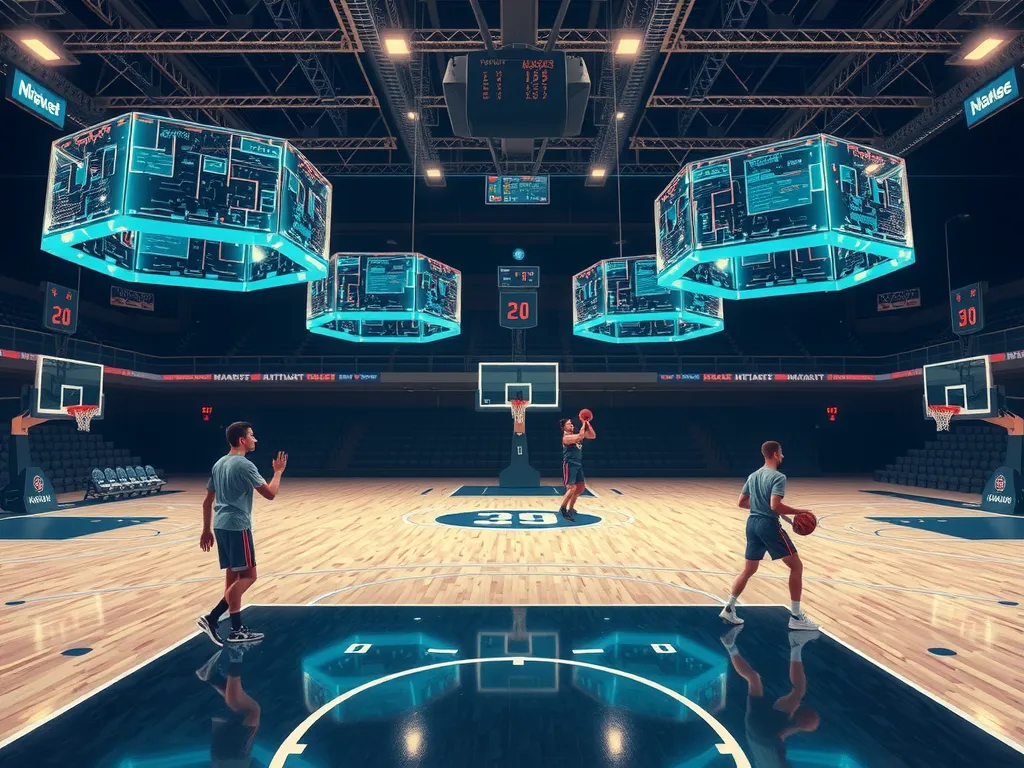
AI-Enhanced Basketball: Boosting Skills and Game Planning
Artificial Intelligence (AI) is transforming basketball by enhancing strategy, improving performance, and simplifying game management. It achieves this by using computer vision to understand movement, machine learning to find patterns, and optimization tools to suggest strategic options. Together, these tools assist coaching choices, provide players with practical feedback, and offer fans clearer insights into the game. From young players using mobile apps to professional coaching teams, AI supports—rather than replaces—the sport’s intuition and knowledge, allowing for more precise, collaborative work in video analysis, conditioning, and game planning. It also standardizes feedback, improving communication across teams.
Improving Player Performance with AI
Player evaluation now goes beyond traditional measures. By tracking movement patterns, wellness indicators, and decision-making, AI identifies potential risks and suggests targeted changes. Computer vision analyzes shot release and trajectory under different conditions—including defender proximity and player fatigue—offering critical guidance for mechanics in high-pressure moments. Wearable technologies measure first-step acceleration and lateral agility, essential indicators for boosting performance and reducing injury risk. If AI detects decreasing acceleration or suboptimal recovery times, it suggests specific changes to training routines to improve both safety and effectiveness. These insights come in clear, actionable formats, helping players and coaches make immediate, informed adjustments. The result is personalized, effective training sessions driven by AI feedback.
AI-Driven Technologies in Use
Advances in AI have expanded the toolkit for evaluation and strategy. Pose estimation extracts details about footwork and timing from standard video, avoiding complex motion-capture setups. Multi-object tracking separates players from the ball to assess spacing, speed, and tactical formations. Sensor-equipped balls and smart insoles capture details like ball spin and landing forces, providing a full picture of on-court activity. On-court cameras then compile this data into concise dashboards featuring heat maps, containment grades, and pace profiles. Beyond measuring metrics, AI connects them to coaching tools, linking video clips of optimal performances with a player’s recent activity to fuel continuous improvement.
AI’s Role in Game Planning
Effective strategy starts with a deep understanding of one’s own strengths and an opponent’s tendencies. AI speeds up this work by analyzing past games and real-time dynamics, predicting likely scenarios and optimizing execution. Before the game starts, models simulate multiple situations to test lineups and approaches against specific defensive schemes, evaluate two-for-one opportunities, refine end-of-game tactics, and manage substitution patterns. During play, real-time analytics reveal trends a coach might miss, such as who is excelling and who needs support. AI systems suggest tactical adjustments for substitutions and energy management tailored to game conditions. By providing data-driven probabilities, AI complements coaching intuition and helps ensure decisions enhance game-day performance.
Case Studies: Successful AI Applications
Many programs report significant gains from AI in training and planning. The Golden State Warriors have notably used advanced analytics to refine defensive tactics, improving player efficiency and reducing injuries. At the college level, AI models have identified spacing issues that lead to turnovers. Some teams use AI-driven workloads to boost late-game performance. International teams use AI to optimize travel and training schedules for peak readiness during tightly packed sequences. Youth sports also benefit, as tailored analytics help young athletes make quicker decisions and strengthen strategic understanding.
The Technical Side of AI Tools
Basketball-focused AI relies on supervised learning, sequence modeling, and reinforcement learning. These methods predict outcomes by examining player positions, movement speeds, and defensive strategies. Recurrent neural networks account for the flow of each play, while reinforcement learning provides decision-trees for optimizing strategy based on situational variables. The effectiveness of these tools depends on high-quality data and thorough analytics. Current systems integrate real-time feedback during practices, with edge computing offering low-latency processing and cloud platforms supporting comprehensive analysis.
Innovative AI-Driven Training Programs
AI is replacing one-size-fits-all routines with highly personalized training. It designs microcycles aimed at specific goals, from refining biomechanics to building stamina. Virtual tools identify inefficiencies in technique, suggest corrections, and create “digital twins” to simulate improvement. These systems consider recovery indicators and adjust intensity on the fly to balance workload and reduce injury risk. Coaches remain central—interpreting insights, maintaining accountability, and motivating athletes—while AI-driven gamification boosts engagement and retention.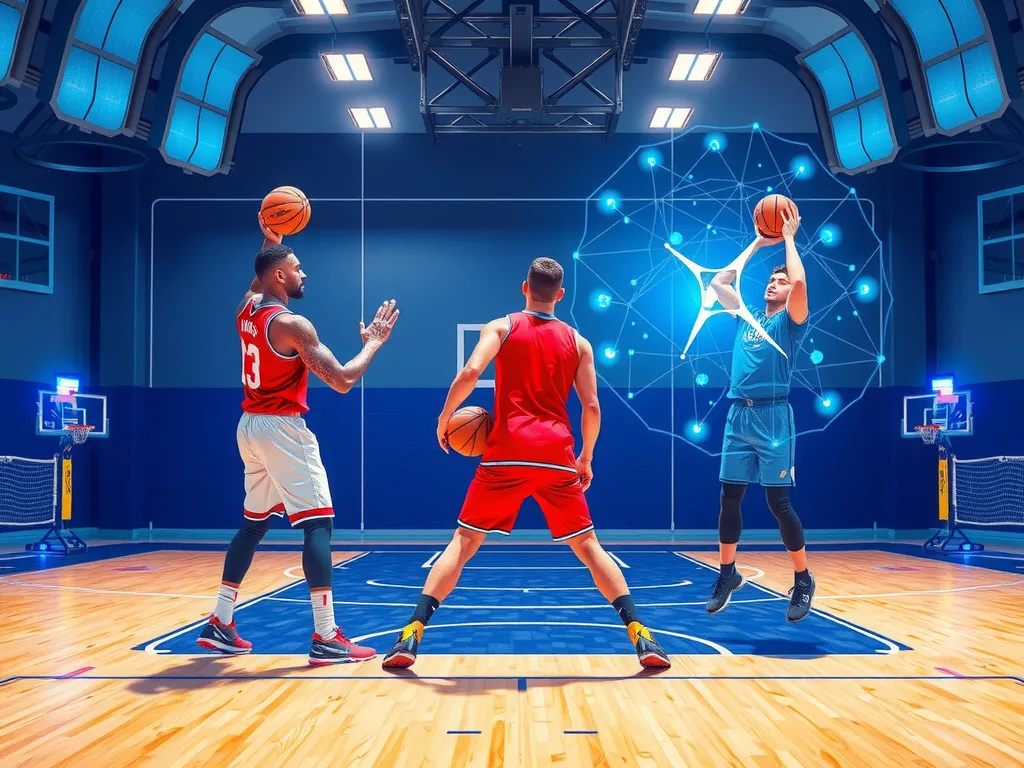
The Future of AI in Basketball
Emerging applications point to more immersive experiences. Virtual reality and augmented reality may let players practice in dynamic environments that mimic real-game scenarios. AI will continue to refine tactical insights and training synthesis, enabling simulation-based strategy development against varied defensive approaches without needing court time. Scouting will evolve through AI-generated playbooks that highlight opponent tendencies. Privacy-conscious practices such as federated learning will be key to sharing insights securely. As capabilities expand, performance analysts and AI experts will play larger roles alongside coaches and technologists. Fans will also gain richer viewing experiences that deepen understanding of tactical maneuvers.
Challenges and Ethics in AI Use
The benefits come with important challenges in ethics, privacy, and fairness. Athlete data must be handled under clear privacy protocols and well-defined agreements. Consent should be comprehensive and free of coercion, especially in youth sports. Ensuring algorithmic fairness across diverse player profiles requires transparency and avenues for challenge. Over-reliance on AI could diminish traditional instincts and leadership, so human judgment remains essential. Broad, inclusive access to AI solutions can help level the playing field and widen participation regardless of budget.
Conclusion: AI Transforming Basketball for the Better
AI blends tradition with innovation, expanding what is possible in basketball strategy and performance. Success depends on balance—letting data inform decisions without overshadowing natural instincts, thereby deepening skills and strategic depth. Winning programs combine data with strong coaching traditions, keeping essential insights and discarding the unnecessary. Players receive crucial feedback to fine-tune workloads and follow plans tailored to their capabilities. The sport as a whole benefits through richer storytelling, safer participation, and a greater appreciation of detail. Used responsibly, AI elevates athletic excellence and enhances the viewing experience, becoming an integral part of basketball’s evolving narrative.
Looking ahead, AI is set to integrate seamlessly across the basketball ecosystem, giving players, coaches, and fans an enhanced experience where strategic insights are at hand, practices adapt to real-time feedback, and personal achievements are tracked and celebrated. The game remains as collaborative and exciting as ever, while AI reveals untapped potential and empowers players and coaches to reach new heights.
Leave a Reply